




Akyver - Multiwall Polycarbonate
Sealing joints compatible with polycarbonate and resin-reinforced polyester covers

In order to guarantee the watertightness of a cover with the materials in our catalog suitable for this function, it is necessary on many occasions to use gaskets that allow it to be sealed.
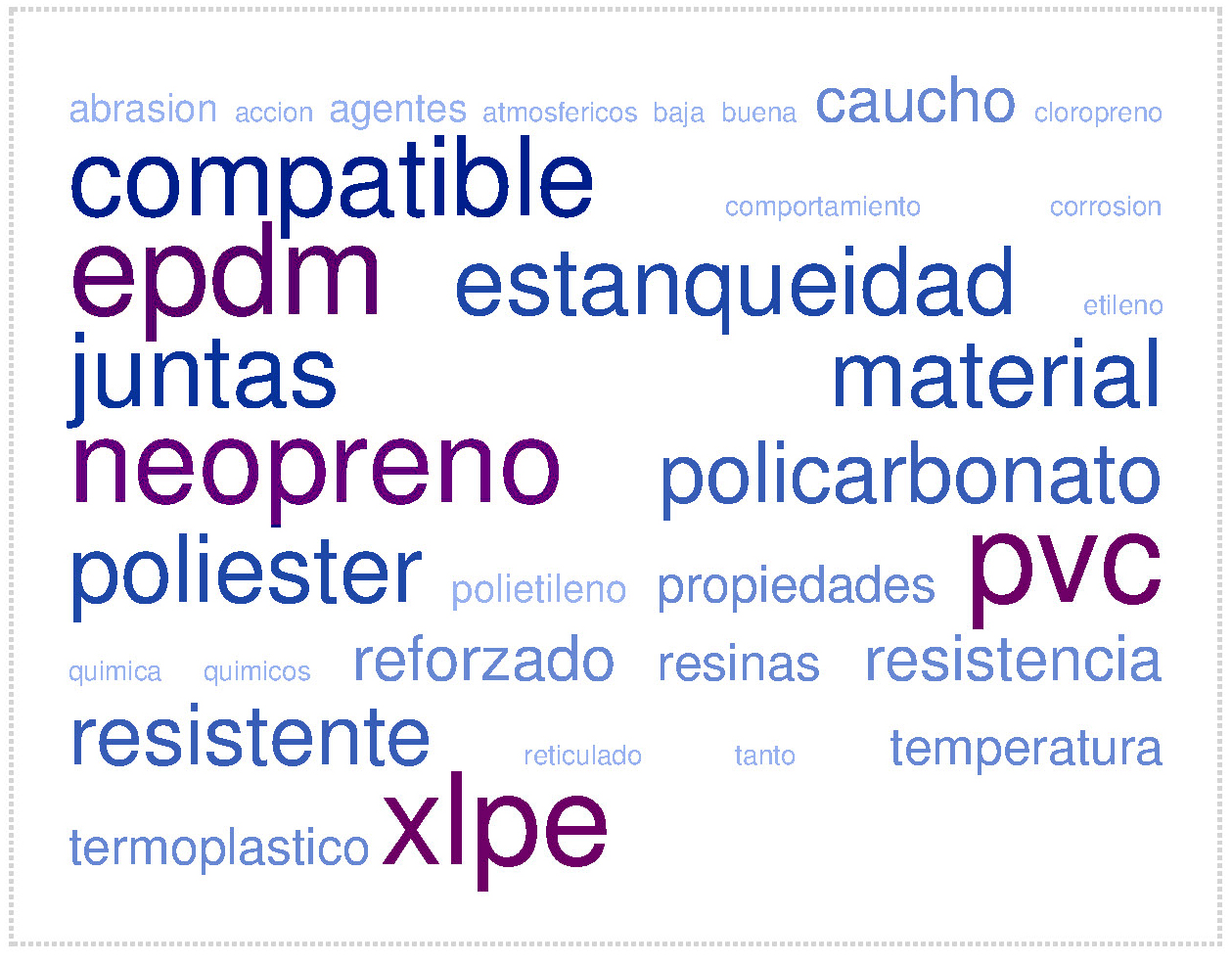
In this article, we are going to briefly review the most common materials used for this purpose, such as EPDM, Chloroprene or PVC, and whether or not they are compatible, depending on the case, with our polycarbonate (cellular or compact) and reinforced polyester sheets.
Chloroprene
El chloropene rubber or Neoprene It is a synthetic rubber that is produced by polymerizing chloroprene. The chemical inertness of neoprene makes it very suitable for industrial applications, such as joints or coatings resistant to corrosion, with excellent mechanical and abrasion properties. In addition to its better fire behavior than exclusively hydrocarbon-based rubbers, it is a self-extinguishing material, that is, although it burns under the action of a flame, it does not spread combustion and shuts off as soon as the heat source is removed.
It is characterized by resistance to degradation caused by the action of ultraviolet rays, ozone and adverse weather agents. In terms of its chemical resistance to oils, fats and hydrocarbon solvents, it is comparable to that of a low-medium content nitrile rubber. In addition to being resistant to inorganic chemicals except oxidizing acids and halogens, it is not resistant to most organic compounds, except alcohols.
It is a rubber with slightly lower resilience than natural hardness but higher than 60º shore A, and with a working temperature range that ranges from -25 to 110 °C. All these properties make it a very balanced material, which is why it is commonly used in all types of sealing joints, protective coatings or elastic bands.
It is a material supported with polycarbonate as with polyester reinforced with resins.
EPDM
El ethylene-propylene-diene rubber or EPDM (Ethylene Propylene Diene type M ASTM) is a thermo polymer elastomer of very low density (1 — 1.3 gr/cm³), which has good resistance to abrasion and wear. The composition of this material contains between 45% and 75% of ethylene, the higher this percentage is generally more resistant.
It is characterized by very good resistance to atmospheric agents, acids and alkalis, and to chemicals in general, and is sensitive to attack by oils, petroleum and hydrocarbonated solvents.
It is a very elastic, highly resistant rubber with a working temperature range that ranges from -40 to 120 °C. This makes it an ideal material both for waterproofing all types of surfaces and a material frequently used in the production of all types of washers and gaskets.
It should be noted that it is supported chemically with both polycarbonate and polyester reinforced with resins.
PVC
El polyvinyl chloride or PVC the product of the polymerization of the vinyl chloride monomer to polyvinyl chloride. This is a thermoplastic low density (1.32 — 1.43 gr/cm³), highly resistant to abrasion, flexible, versatile, inert and resistant, as well as harmless.
PVC is self-extinguishing so it does not spread the flame once exposure to fire has ceased. Suitable for outdoor use as it is waterproof, resistant to weather and corrosion, making it a material with a very good response to atmospheric agents.
Extremely versatile, allowing use in industry, construction, signage and marketing, easily recyclable, suitable for mechanical and chemical recycling.
This product features chemical incompatibility with polycarbonate and also with polyester reinforced with resins.
XLPE
El cross-linked polyethylene or XLPE is a cross-linked form of polyethylene. XLPE is based on a thermoplastic polyethylene that is vulcanized or cross-linked through the use of chemical and/or physical agents such as pressure, temperature and steam, thus rearranging the molecular chains of the thermoplastic and finally obtaining a cross-linked polyethylene with intertwined molecular chains. As a result of this molecular rearrangement, the resulting material has the electrical properties found in thermoplastic, such as high dielectric strength, low loss factor and greater resistance to moisture.
Another consequence of this structural transformation is that it goes from being thermoplastic to thermostable, so that changes in temperature do not alter its mechanical properties due to its reticulated structure.
Material with good weather performance and resistant to corrosion, although the action of UV can alter its behavior and cause loss of properties. Flexible material, resistant to low temperature impact and resistant to abrasion.
It is a material supported with polycarbonate as with polyester reinforced with resins.



.jpg)