



In this article we are going to analyze the basic concepts to consider when making a curved roof with different materials from our catalog.
- PO 01. Polycyril. Cast methacrylate.
- P.C. Compact polycarbonate.
- AK 01. Cellular polycarbonate.
- AK 14. Cellular Polycarbonate System Panels
For all these materials, the basic concepts that we must take into account in terms of design are:
R= Minimum Curvature Radius H= Height or ArrowC= String or Vanol= Length
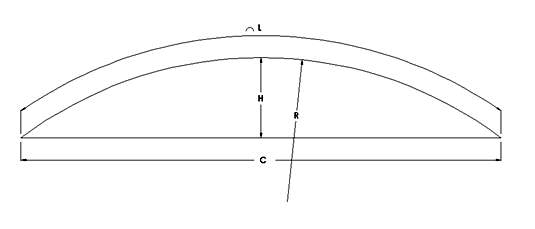
Minimum radius of curvature.The minimum radius of curvature of a material is the point that allows it to be bent under tension without losing its mechanical and optical characteristics. Depending on the material we use, the radius of curvature will be different. We then went on to analyze it according to the material used.PO 01 Policril. Cast methacrylate.Polycril can be cold bent without affecting its strength, impact, or transparency, and provided that the minimum radii of curvature due to thickness are respected.
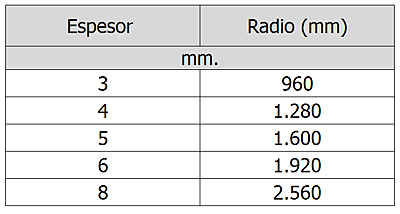
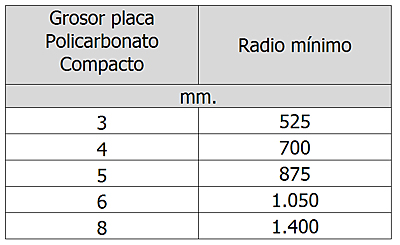
As a guideline, the minimum radius of curvature is set at 320/330 times the thickness of the material, with the following values:PC Compact PolycarbonateCompact polycarbonate sheets can be cold curved on pre-curved support profiles. The tension levels of the plate will depend on the thickness and the radius, always
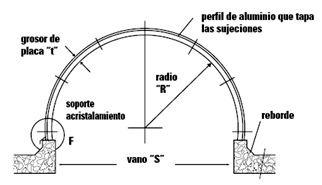
and when these values do not exceed a recommended limit the tension will not affect the properties of the material. The basic criterion for the minimum radius of compact polycarbonate is 175 times the thickness of the plates. The minimum radius values are indicated in the attached table:
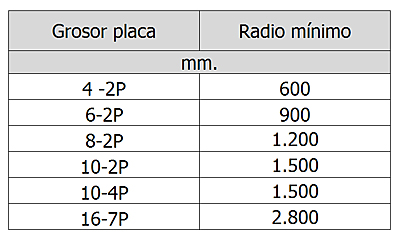
AK01. Akyver. Cellular polycarbonate plate. Cellular polycarbonate sheets allow cold bending. And as in the previous two cases, it can be curved on profiles
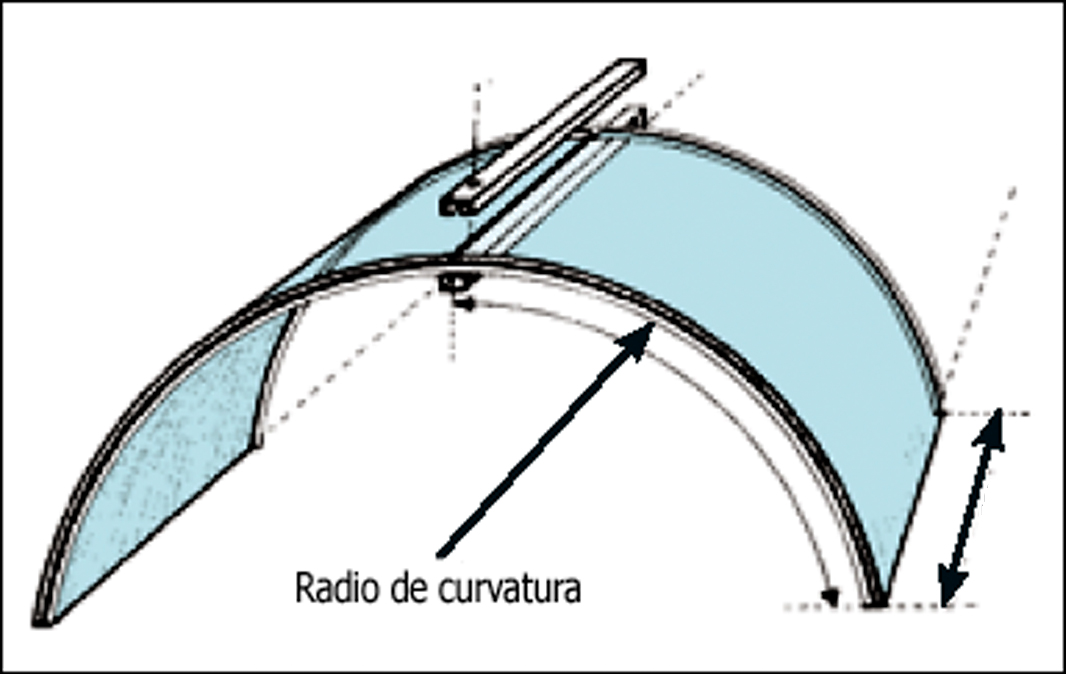
of support, without exceeding the minimum allowed radius, which in this case is set at 150 times the thickness of the plate, as it appears in the attached table, where we make the ratio of the thicknesses to the number of walls of the structure of the plate. To make these vaults, it is necessary to pre-curve the aluminum profiles in the workshop, in this way the Akyver polycarbonate sheets will adapt to the curvature of the profiles. The plates must always be curved lengthwise (in the direction of the cells), according to the recommended radii depending on the thickness of the profiles. plate.
AK14. Cellular polycarbonate system panels.The panels of cellular polycarbonate systems can be cold-curved to adapt to self-supporting plasticized galvanized steel profiles. These profiles are pre-curved in the workshop according to the recommended minimum radius, which depends on the joint profile chosen, depending on the joint profile chosen, depending on whether standard or maxi, and the width of the panel; these types of panels are sold in 500 mm and 1000 mm.
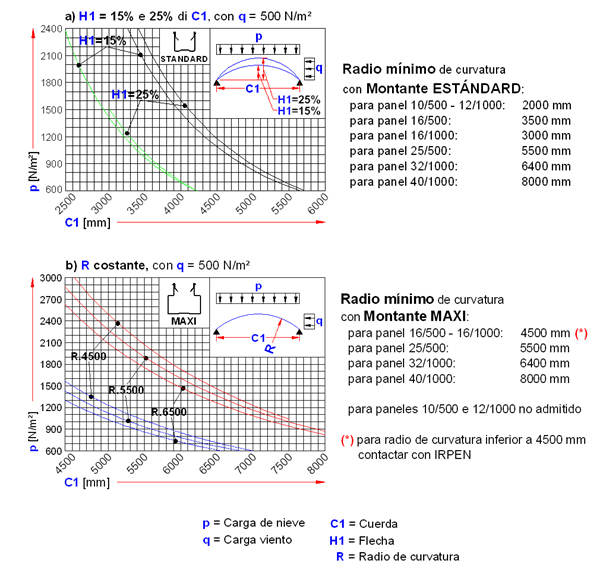
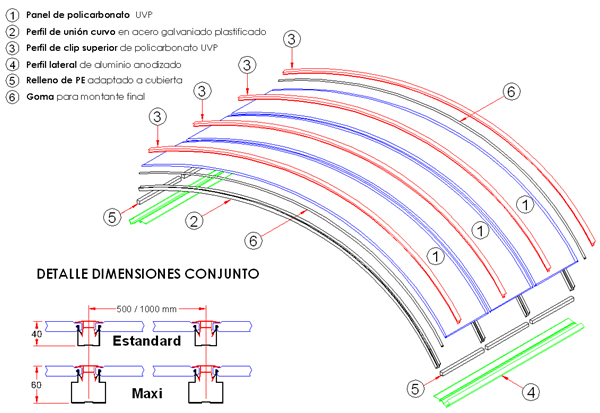
This construction system makes it possible to cover roofs with large opening lights, only with the extreme supports and due to its assembly system it facilitates the mounting system, as can be seen in the attached diagram:
Example of calculation. With what is stated in this article, we can choose the material that best suits our construction or project needs, depending on the light to be covered, the conditions of the material: insulation, transparency, thickness, etc. For example, if we find an installation that has to be covered with a light or rope of 4,200 mm and an arrow of 1,200 mm and a radius of curvature 2,275 mm, and we want to make it with a thickness of 12 mm. We have several possibilities to execute it:
- We couldn't execute it with PO01. Polycyril. Cast methacrylate.
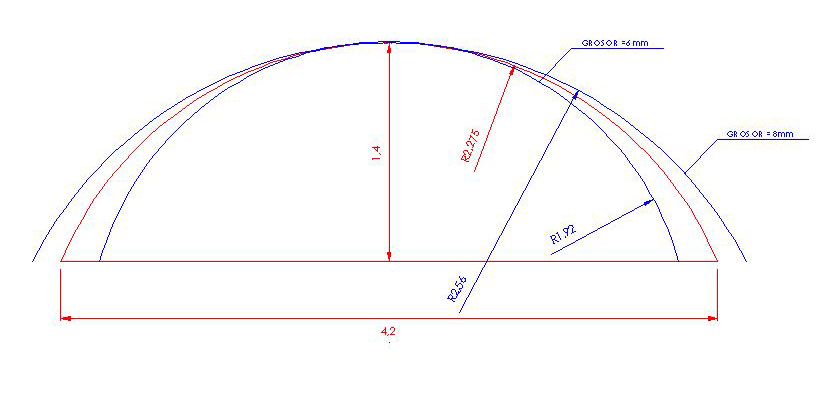
To be able to do this we need a thickness ≤ 6 mm
- Compact polycarbonate does allow us to implement this solution
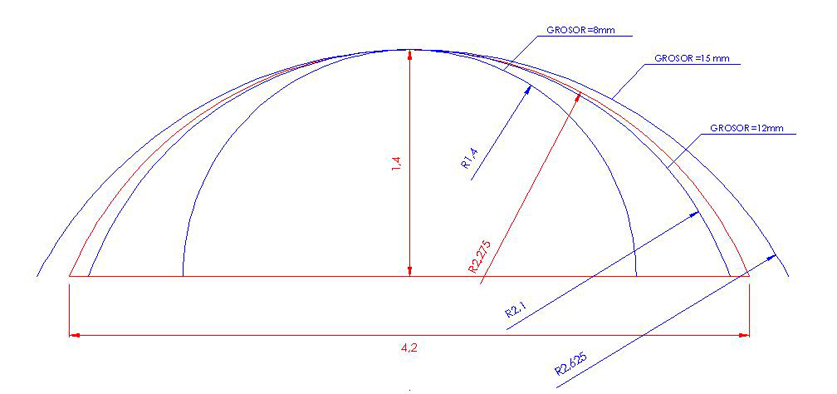
- In AK01. Akyver. Cellular polycarbonate plate we do not have this thickness, we would have to use a thickness ≤ 10 mm
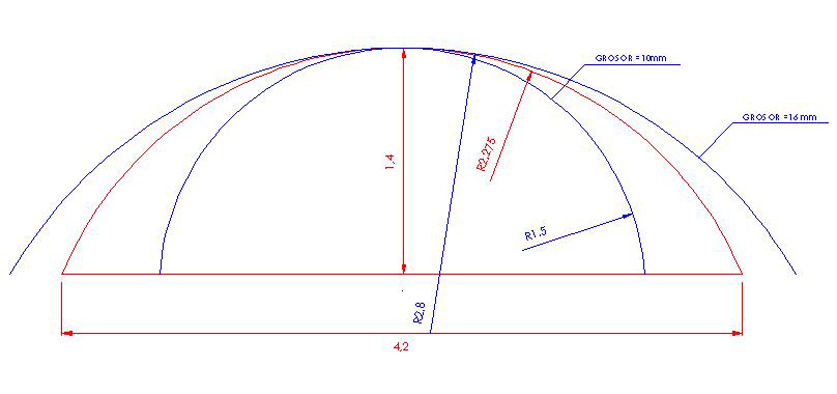
- In the case of AK14, Cellular Polycarbonate System Panels, we could make it with 10 and 12 mm panels, but always with the standard joint profile, since for these thicknesses the maxi profile cannot be used.